SMART Plants in Dynamic Environments
Climate change, a growing global population, and the depletion of natural resources are major challenges for food security. To meet these challenges, plant-based innovations are more important than ever. Rapid environmental change underscores the need for advances in plant and microbial biology to create resilient, resource-efficient crops.
Who we are
CEPLAS integrates the resources of the Universities of Düsseldorf and Cologne, the Max Planck Institute for Plant Breeding Research, Cologne, the Forschungszentrum Jülich and the Leibniz Institute of Plant Genetics and Crop Plant Research, Gatersleben, into an internationally leading plant science center that attracts world-class faculty and junior researchers.
What we do at CEPLAS
CEPLAS - The Cluster of Excellence on Plant Sciences conducts cutting-edge fundamental research to understand the genetic and biological principles behind complex plant traits, and how plants and their associated microbes work together in dynamic environments. Our goal is to predict how plants will perform under future conditions and to "program" next-generation SMART plants - plants with novel traits combinations and improved ability to respond to environmental change.
We are developing computational models that connect plant genes, traits, and microbial partners to show how they interact and how they can be modified to improve the ability of plants to acclimate.
We focus on two key biological challenges relevant for improving the plant’s resilience and nutrient efficiency:
- How plants balance growth and metabolism – Understanding how development and energy use are coordinated across different levels, from cells to the whole plant in dynamic environments.
- How plants interact with beneficial microbes – Exploring how these relationships help plants adapt to soil conditions and environmental stress.
Over the last years, we dissected complex traits - such as flower and leaf development, C3/C4 photosynthesis, or root-microbiome interactions - into smaller, manageable components and identified the underlying genes, molecules, and metabolic networks. Now, we take the next step: understanding how these trait components interact and are coordinated in response to internal and external signals – with the goal to engineer trait combinations with predictable performance (bottom-up trait engineering).
Beyond fundamental research
Besides our research mission, CEPLAS promotes training of its members and provides novel forms of training for undergraduate and graduate researchers and postdoctoral scientists at the interface of plant and microbial biology, systems and synthetic biology, and theoretical biology.
Also, the transfer of research results into the generation of socio-economic impact has been defined as strategic goals of CEPLAS. Since the beginning, the cluster has been committed to translating research outcomes into real-world applications, implementing a range of structured initiatives and formats to facilitate this transfer. In addition, transfer activities of CEPLAS have been supported by the TRANSPLANT project, an initiative involving Heinrich Heine University Düsseldorf, University of Cologne, and Rhine-Waal University of Applied Sciences, Kleve, funded by the NRW Ministry for Culture and Science. TRANSPLANT aims to maximize the impact of fundamental plant science research by fostering collaboration between academia, industry and farmers, and by promoting entrepreneurship among scientists.
CEPLAS at CropIB 2026
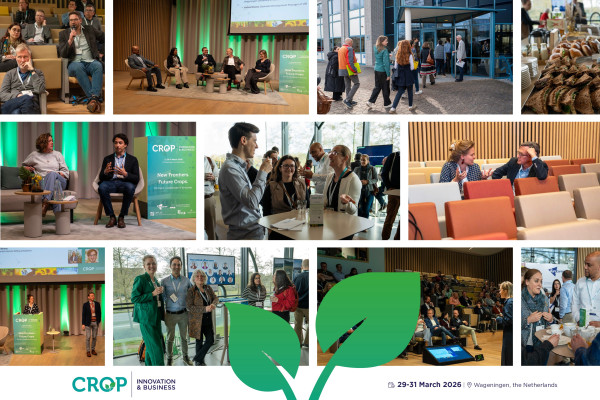
At this year’s CropIB conference, CEPLAS scientists Thomas Hartwig, Simon Zumkeller and Kumsal Colpan, will present their research, illustrating the potential for translation into the development of innovative plant breeding procedures and biotechnological approaches. In addition, the CEPLAS transfer team will be represented at CropIB 2026.