Gene‑edited crops are moving from promise to practice. The first commercial products are reaching the market as regulatory routes open up globally, and Europe is advancing toward a specific framework for plants developed with new genomic techniques (NGTs). Momentum is building, and with it, also the demand for advanced crop transformation platforms that can help translate R&D into field‑ready varieties. Today, the scale of edit multiplexing and the ability to implement complex edits directly into elite commercial germplasm defines the frontier.
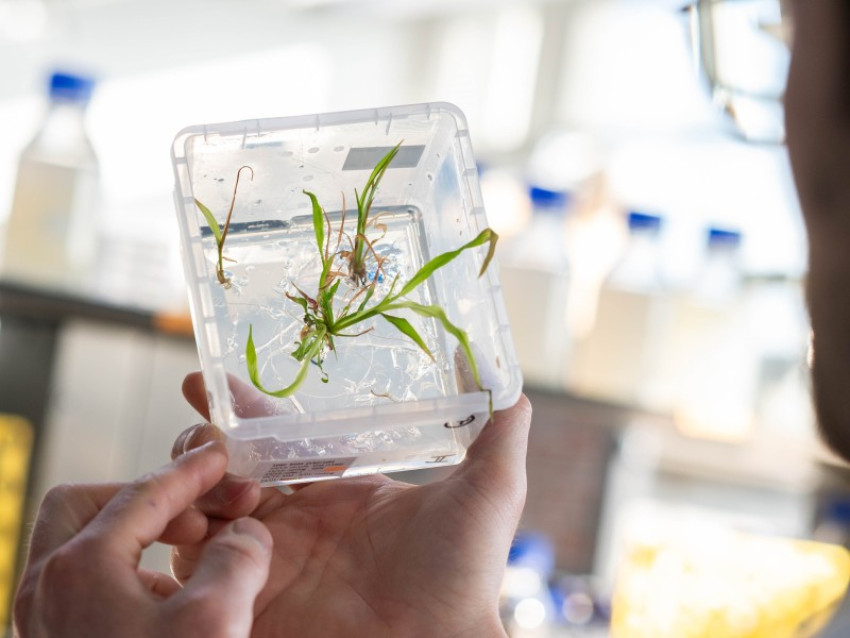
For over a decade, the VIB Crop Genome Engineering Facility (CGEF) has supported academics, start‑ups, and multinationals in generating genetically engineered maize lines and more recently also soybean was added to the portfolio. Over the years, the CGEF has refined its workflows by optimizing tissue culture, explant quality, quality control, and event characterization. Yet, two sector‑wide realities still shape timelines and costs. First, transformation efficiency remains a limiting factor, making genetic engineering projects resource‑intensive. Second, genotype dependence makes success rates unpredictable and many commercial varieties remain stubbornly recalcitrant to transformation and regeneration.
The CGEF continuously invests in method development to address these constraints. A core strategy is the use of morphogenic regulators (MRs) to boost somatic embryogenesis, a decisive step in regenerating transformed plantlets. Several MRs are already known, including BABY BOOM (BBM) and WUSCHEL (WUS). However, broad deployment of these technologies is not plug‑and‑play as constitutive overexpression of embryogenesis boosting genes can cause a variety of pleiotropic effects and fertility issues. In practice, turning promising MRs into a performant, generalizable transformation platform requires careful fine-tuning of MR spatiotemporal expression during transformation and testing combinations with different MRs, explant type and tissue culture conditions. This is often requires rigorous, time-consuming empirical optimization due to lack of mechanistic and molecular understanding.
Being embedded within the VIB‑UGent Center for Plant Systems Biology (PSB), the CGEF can leverage this broad pool of scientific knowledge and technological expertise to discover new MRs and gain molecular insight how different MRs work. A recent example is a study combining single‑cell profiling of immature maize embryos undergoing BBM‑ and WUS‑induced somatic embryogenesis with gene-function prediction based on in-house developed machine learning algorithms1. This resulted in a detailed gene regulatory network and multiple novel candidate MRs which can now be used to drive somatic embryogenesis pathways and be incorporated into next‑generation crop transformation protocols.
Beyond advancing transformation and regeneration methods, the CGEF is also committed to deploying the latest generation of gene-editing tools. Single‑gene edits can already deliver value in nutrition, qualitative traits, and pest resistance. The next major opportunity lies in quantitative traits such as yield stability and tolerance to heat and drought, typically governed by many loci simultaneously. Tackling such complex traits requires genome editing at scale. That is why the CGEF works closely with the lab of Thomas Jacobs at PSB, which develops exactly these kind of tools, enabling systematic mutation of tens, hundreds, or even thousands of genes at a time. For example, the group has developed modular vector systems to rapidly assemble CRISPR screening libraries or transformation vectors stacking increasing amounts of gRNA’s. These vectors are made available to the community through the lab’s curated plasmid collection. Furthermore, the lab has developed high throughput testing of gene editing reagents and specialized genotyping methods. The publication of the BREEDIT pipeline nicely showcased how bringing together this multiplexing expertise with a performant crop transformation technology to unlock higher-order gene discovery projects3. The development of the BREEDIT technology within VIB ultimately led to the inception of the VIB spin-off company Rainbow Crops.
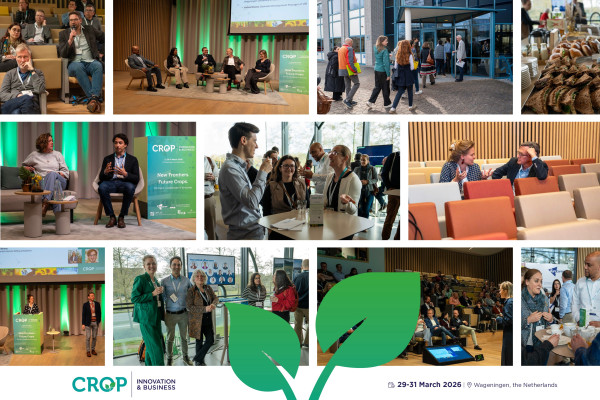
So let’s connect. If you are exploring a genetic engineering project, the CGEF can help you assess feasibility, design the right workflow, bring in the additional scientific expertise available at PSB and execute efficiently. Be sure to meet the CGEF team and catch Thomas Jacobs’ latest results during his talk at CropIB2026!
Contact CGEF: lennart.hoengenaert@psb.vib-ugent.be
1 Renema et al. (2025), BioRxiv, Gene regulatory network analysis of somatic embryogenesis identifies morphogenic genes that increase maize transformation frequency
2 Gaillochet et al. (2023), Genome Biol, Systematic optimization of Cas12a base editors in wheat and maize using the ITER platform.
3 Lorenzo et al. (2023), The Plant Cell, BREEDIT: a multiplex genome editing strategy to improve complex quantitative traits in maize